

I recently found myself back in the magnificent city of Istanbul, a place where continents and cultures collide, and there was one thing, above all else, at the very top of my ‘to-do’ list: find a hamam.
My first Turkish bath experience was 10 years ago in this very city at the truly iconic Hürrem Sultan Hamami, an historic establishment that has been welcoming guests since 1556! This time around, my budget was a little tighter, so I opted for a charming, more local hamam just around the corner from my hotel. But you know what? The experience was no less magical.
The Scrubbing Ritual (The Kese!)
Before the bathing, there is a purification step that sounds brutal but ends in pure delight. After you’ve spent time relaxing on a large, heated marble slab in the center of the room, your attendant pours water over you. Just when you’re beginning to relax, they take a rough mitt (think lufa meets steel wool), and begin to scrub you.
I won’t lie to you, this part can be intense. It’s a vigorous, abrasive scrubbing, and in the moment, you might think, “is this supposed to hurt?!” But here’s your first reward: as your attendant scrapes away, you can actually see the rolls of dead skin—the very evidence of your previous life, sins, and sunburns—peeling off and washing down the marble slab! It’s simultaneously a little disgusting and utterly magnificent! You leave the scrubbing phase feeling slightly raw, but with the distinct feeling that you have shed years, maybe even decades, of accumulated grime.
The Warm Cloud Ritual
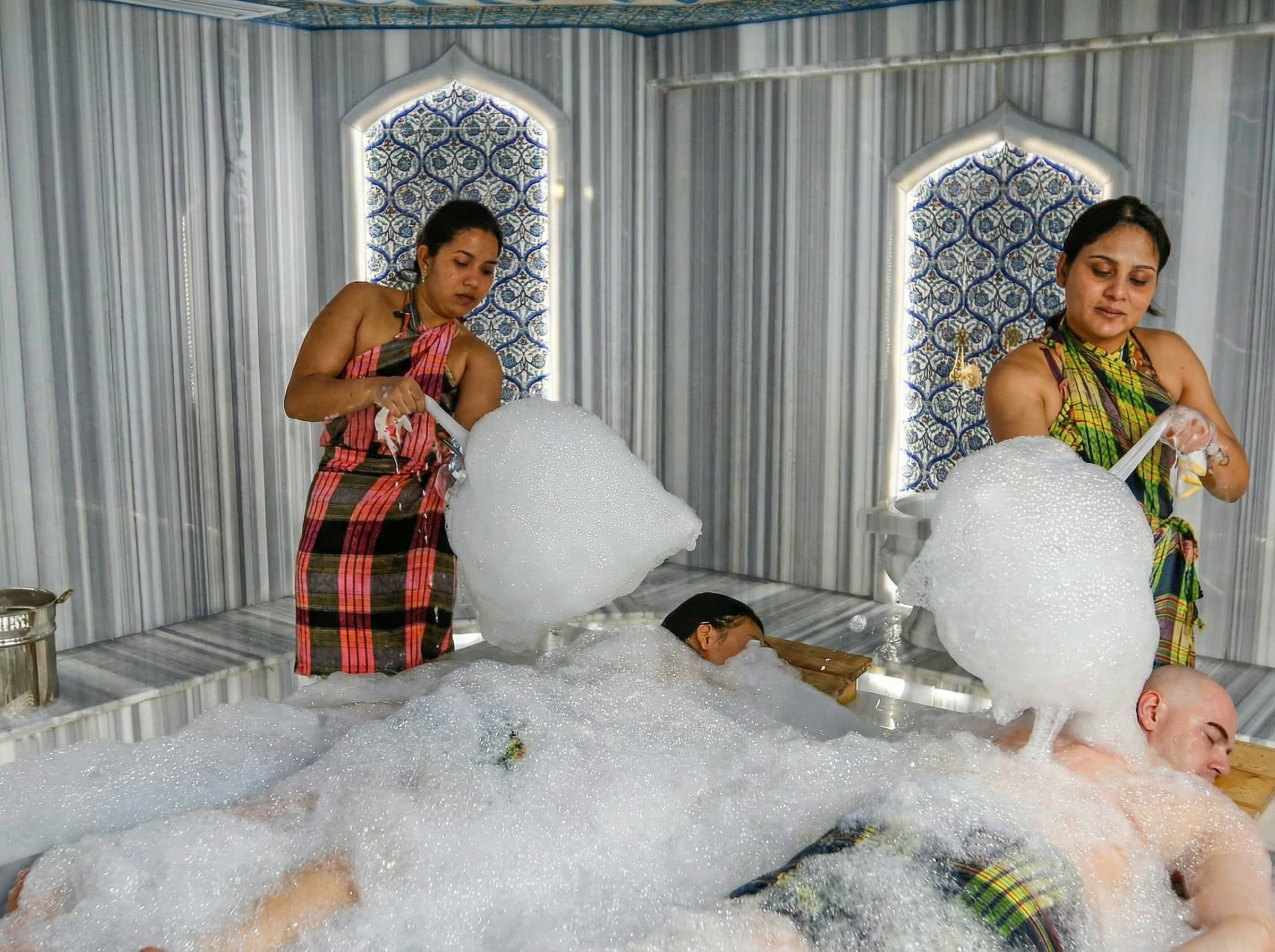
Once your fresh new layer of skin has been exposed, it’s time to give it its own spa treatment. Your attendant takes a special cloth—think of it as a giant, soft cheesecloth bag and dips it in a traditional bowl filled with soap. With a rhythmic motion, they skillfully agitate the soap in the bowl, creating billows of frothy, warm suds, similar to a barber preparing a shaving brush.
Then comes the magic. They remove the suds filled bag from the bucket and wave it gently next to you, catching air and filling the sieve with even more glorious foam. Finally, they come closer, and in one smooth motion, they squeeze the warm, foamy cloud directly over your body. It’s an indescribable sensation—like being enveloped in a viscous, warm cloud that clings and rounds every curve of your body, from front to back. What follows is pure bliss: a deep, cleansing soap massage, equally balanced by what can only be called a water massage. They pour warm water from bowls or buckets over your body, rinsing away all of the suds and your stresses.
The grand finale? You’re moved to a serene room to relax, sipping on fragrant rose petal tea infused with rosemary. If you’re luckier yet, you’ve scheduled a massage to follow your cleaning. Either way, you are allowed all the time you want in the relaxation room.
The Universal Wisdom of Hot and Cold
As I lay there, sipping my tea, utterly content, a thought struck me: I can’t believe we don’t have these available in the United States, especially when similar rituals are enjoyed throughout the world. In fact, it got me wondering, are they all connected? While the Roman Empire certainly perfected the elaborate thermal baths (the ancestors of today’s Turkish Hamam), many other cultures actually developed their own hot and cold therapy traditions completely independently!
The Finns created their iconic saunas, with their specific dry heat and the invigorating plunge into cold lakes or snow, born of living in a frigid climate. Native Americans developed the sacred sweat lodge, a spiritual and physical purification ritual, completely isolated from European influence. And both Japan and Korea have their fantastic 24-hour communal bathhouses that blend saunas, healing rooms, and cold plunges, all part of their own cultural evolution.
Thermal therapy beliefs are more consistent across global cultures than spiritual beliefs. From Istanbul’s ancient hamams to Finnish saunas, and even the sacred sweat lodges, people across the globe have instinctively understood the power of alternating heat and cold for cleansing, healing, and rejuvenation. It’s a reminder that no matter where you travel, you’ll find common threads of human experience, even in the most unique cultural traditions.
So, on your next adventure, if you get the chance, absolutely seek out a local hamam, sauna, or bathhouse. It’s not just a bath; it’s an ancient ritual, a cultural immersion, and an experience that will leave you feeling completely reborn.